
QST Hospital
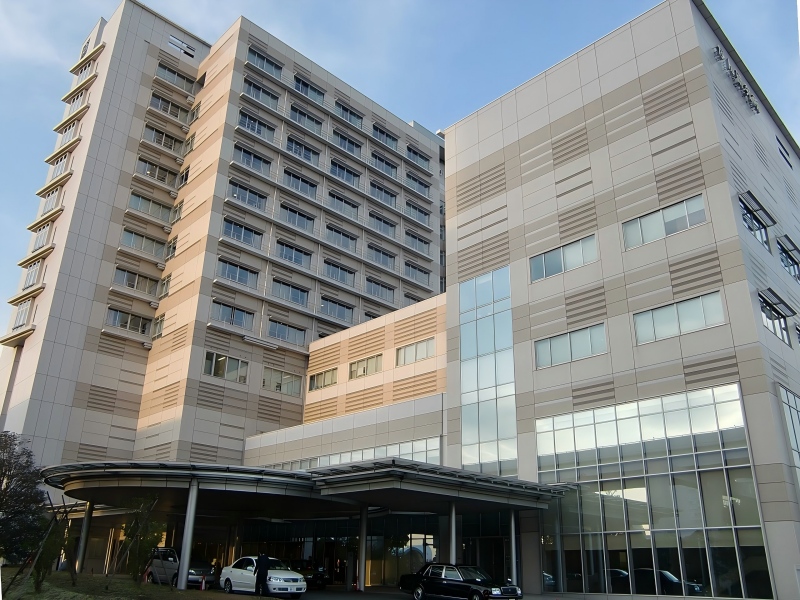
Hospital Information
- Country
- Japan
- City
- Chiba
- Website
- www.qst.go.jp
Partnership Status
✓ Official Partner Hospital
Authorized referral institution with contractual partnership.
Saint Lucia Consulting provides comprehensive referral support including medical record translation, appointment booking, visa assistance, and overseas care coordination.
About QST Hospital
Introduction to QST Hospital, Japan
QST Hospital, officially known as the Hospital of the National Institutes for Quantum Science and Technology, was established in May 1961. Its predecessor was the hospital of the National Institute of Radiological Sciences. It is a research hospital primarily focused on radiological diagnosis and treatment.
QST Hospital has extensive clinical experience in cancer diagnosis and treatment, particularly in heavy ion therapy for cancer. It was one of the earliest hospitals in the world to provide heavy ion therapy and has treated the largest number of heavy ion therapy cases worldwide.
QST Hospital is located in Chiba City, Chiba Prefecture, Japan, and has a total of 100 hospital beds.
In 1994, Japan became the first country in the world to begin heavy ion radiotherapy, and QST Hospital was Japan’s first medical facility dedicated to heavy ion therapy. The following year, the current new hospital was opened as a specialized hospital for heavy ion therapy.
QST has a 27-year history in heavy ion therapy, with medical experience and clinical outcomes at a world-leading level. As of March 2024, more than 15,000 patients had received heavy ion therapy at the hospital.
For various types of tumors, treatment outcomes have achieved approximately an 80% five-year control rate, representing remarkable results. Its physicians have rich clinical experience and highly refined technical skills. By precisely controlling safe and effective radiation doses, patients generally experience few significant side effects.
The hospital is also promoting a program known as the “Quantum Scalpel Project,” which aims to improve the performance of heavy ion therapy equipment while reducing the size of the devices. It actively conducts research on radiation effects, cancer, Alzheimer’s disease, and other diseases, and continues to advance the development of diagnostic imaging, nuclear medicine diagnostics, and radiotherapy technologies.
At the same time, in order to apply research results to patient diagnosis and treatment as early as possible, QST Hospital actively promotes clinical trials to verify the effectiveness of new methods. In addition, the Japanese government has designated QST as a national core advanced radiation medical support center, making it a central institution in Japan’s emergency radiation medicine system.
In addition to its activities within Japan, QST actively collaborates with international organizations such as the International Atomic Energy Agency, the World Health Organization, and radiation science committees. QST aims to become a globally advanced technology institution. To achieve this goal, its internal departments work together closely as an integrated organization.
QST actively carries out various initiatives in pursuit of its mission: “zero cancer deaths and the creation of a long-lived society.”
Advantages of Heavy Ion Therapy
QST Hospital is part of the National Institutes for Quantum Science and Technology. It is a specialized hospital dedicated to cancer radiotherapy and also functions as an emergency radiation medical institution.
As a hospital affiliated with the National Institute of Radiological Sciences, it mainly provides radiotherapy for cancer, with a particular focus on heavy ion cancer treatment.
Since 1994, QST Hospital has been equipped with HIMAC, a heavy ion medical accelerator dedicated to research in heavy ion cancer therapy. Through clinical research and treatment using HIMAC, the hospital has accumulated the world’s most extensive experience in this field.
World-Leading Heavy Ion Therapy
The core medical service provided by QST Hospital is heavy ion therapy. Compared with conventional radiotherapy, heavy ion therapy can minimize the impact on normal cells while delivering a concentrated high dose of radiation to cancer cells.
QST developed the world’s first heavy ion medical accelerator for clinical treatment, HIMAC, and has continued to lead the development of heavy ion therapy. Based on more than a quarter century of research and clinical experience, QST provides cancer patients with state-of-the-art heavy ion therapy.
In addition, to reduce side effects and improve treatment efficacy by concentrating the effects of heavy ion beams on the affected area, QST developed a three-dimensional beam scanning irradiation method capable of respiratory-synchronized irradiation in 2011 and began using it for treatment.
To allow patients to receive treatment in a comfortable position, QST achieved heavy ion therapy using a compact rotating gantry with superconducting technology in 2018, enabling heavy ion beams to be delivered from any direction.
Extensive Research and Clinical Achievements
As of March 31, 2024, the number of registered patients in clinical studies of heavy ion therapy conducted at QST Hospital had reached 15,911 since June 1994.
Since 2003, the number of patients receiving treatment through Japan’s advanced medical care system has continued to increase. Since 2016, the number of patients receiving treatment covered by public health insurance has also been increasing.
Partnership Highlights
Years of established referral partnership with Saint Lucia Consulting
Dedicated patient coordinator for every referred case
Overseas support team available throughout the care journey
How We Work with QST Hospital
Our partnership ensures that Chinese patients referred to QST Hospital receive clinically appropriate, well-prepared cases with complete documentation, organized medical records, and ongoing support throughout their care journey.
We evaluate whether QST Hospital is the right clinical fit for the patient's specific condition.
Medical documents are translated, organized, and reviewed through our three-tier quality process.
We coordinate hospital appointments, visa processing, flights, accommodation, and local transport.
Our 7×24 overseas service team provides interpretation, family support, and care coordination.
Interested in This Hospital?
Speak with a consultant about referral to QST Hospital.
Our team can assess whether this hospital is the right fit for your medical situation and guide you through the entire referral process.